Author Archives: magali

The Silk Chronicles: Weft

14 June 2019

[This film is the sequel to the film The Silk Chronicles: Warp]

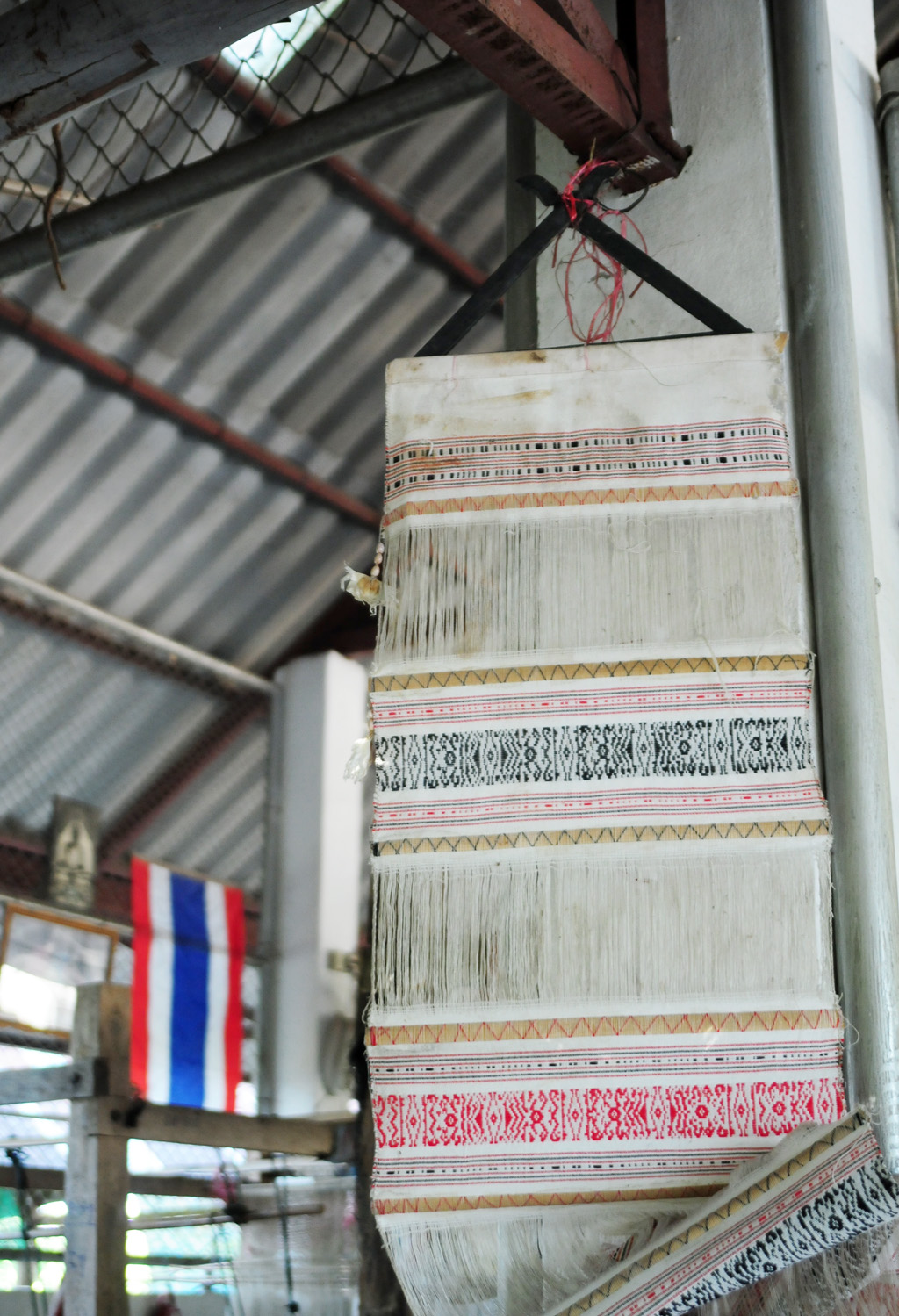
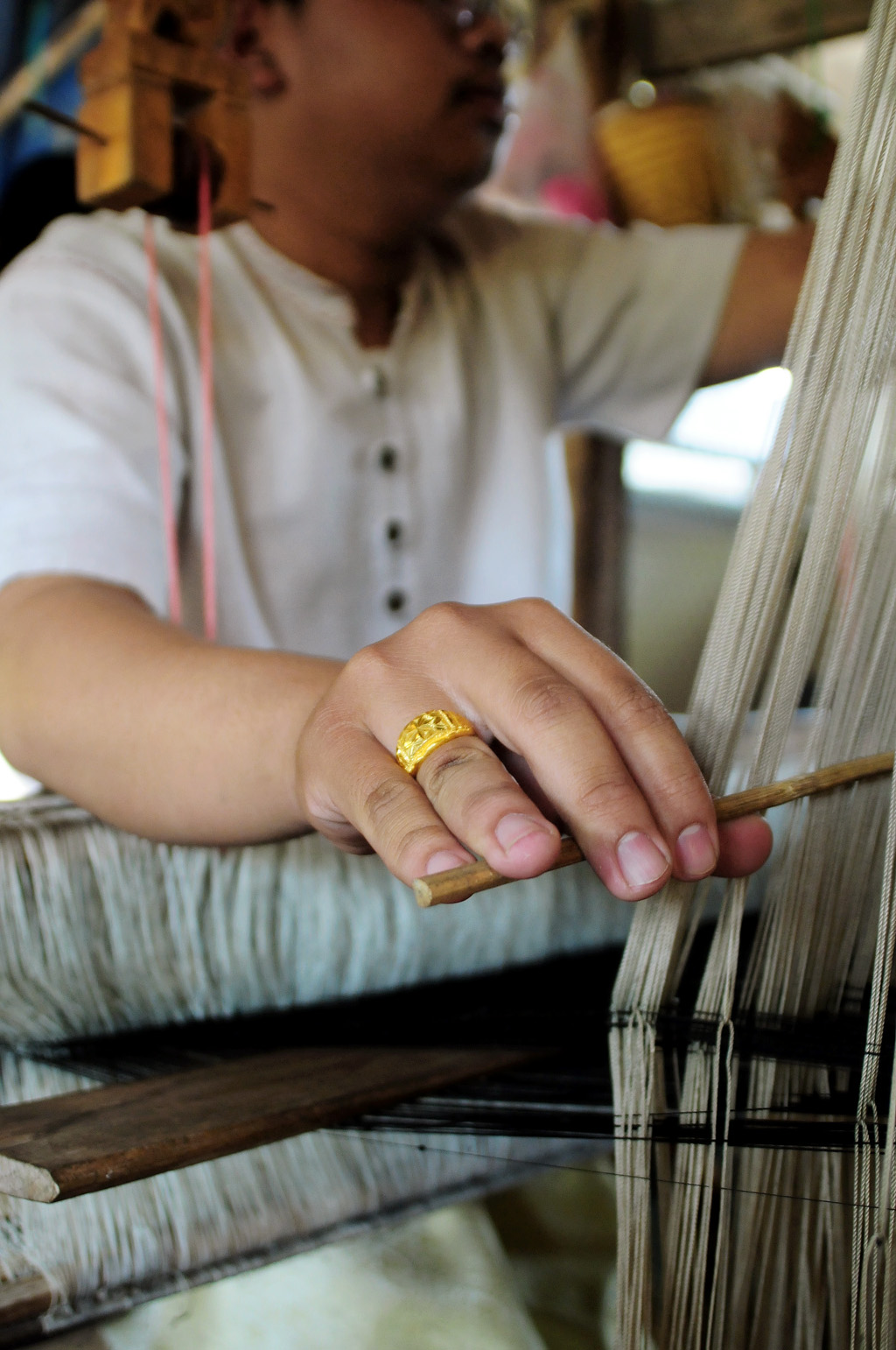
At the Krama Yuyu weaving workshop located in Ta Pouk village near Siem Reap in Cambodia, Chenda Heng, master weaver and manager of the studio, and her sister Theary are preparing of what will become the weft of the fabric, that is, the threads crossing the warp which has already been set up on the loom. The weavers are following the Cambodian ikat technique. Each bundle of silk is tied and dyed on successful dye baths to create complex multicolored geometric patterns. The silk threads are then wound on spools. They will be passed on the loom on the black silk warp. The film tells this intricate process repeating several rounds of tying, dyeing, and drying.
Chenda and Theary learned the art of silk weaving from their mother in their teenage years. At the workshop, they often work as a tandem.

The Silk Chronicles is a film series in two parts. It was shot in July 2017 and documents the reclaimed practice of Cambodian weft ikat silk weaving. Showing what happens before weaving on the loom, The Silk Chronicles: Warp and Weft show all the preparatory steps before the actual weaving on the loom. Both films close at the same meeting point, when Chenda the master weaver starts assembling the two elements we have discovered in order to create lavish silk ikat textiles.

Short documentary film
Directed by Magali An Berthon
Edited by Remi Buono
duration 12:04
Ta Pouk, Cambodia
(2017)

The Silk Chronicles: Warp

14 June 2019

At the Krama Yuyu weaving workshop located in Ta Pouk village near Siem Reap in Cambodia, Chenda Heng, master weaver and manager of the studio, her sister Theary and their weaving team are preparing a seventeen meter-long silk warp to produce a series of multicolored ikat textiles. Chenda and Theary learned the art of silk weaving from their mother in their teenage years in the southern area of Cambodia. At the workshop, they often produce handwoven cotton textiles for an international market and do not have many occasions to weave silk in the traditional way. The Silk Chronicles is a film series in two parts. It was shot in July 2017 and documents the reclaimed practice of Cambodian weft ikat silk weaving.

Preparing the warp is usually the first stage of weaving. The Silk Chronicles: Warp shows the preparation of the black silk warp which will be installed on the loom and become the foundation of the future fabrics to be woven. Following a series of precise and delicate steps, the story reveals a fascinating group dynamics where touching and seeing often surpass verbal communication, and where each weaver plays an essential in the collective project’s success.

Short documentary film
Directed by Magali An Berthon
Edited by Remi Buono
duration 08:08
Ta Pouk, Cambodia
(2017)


Korrakod’s Textile Dream

15 July 2017

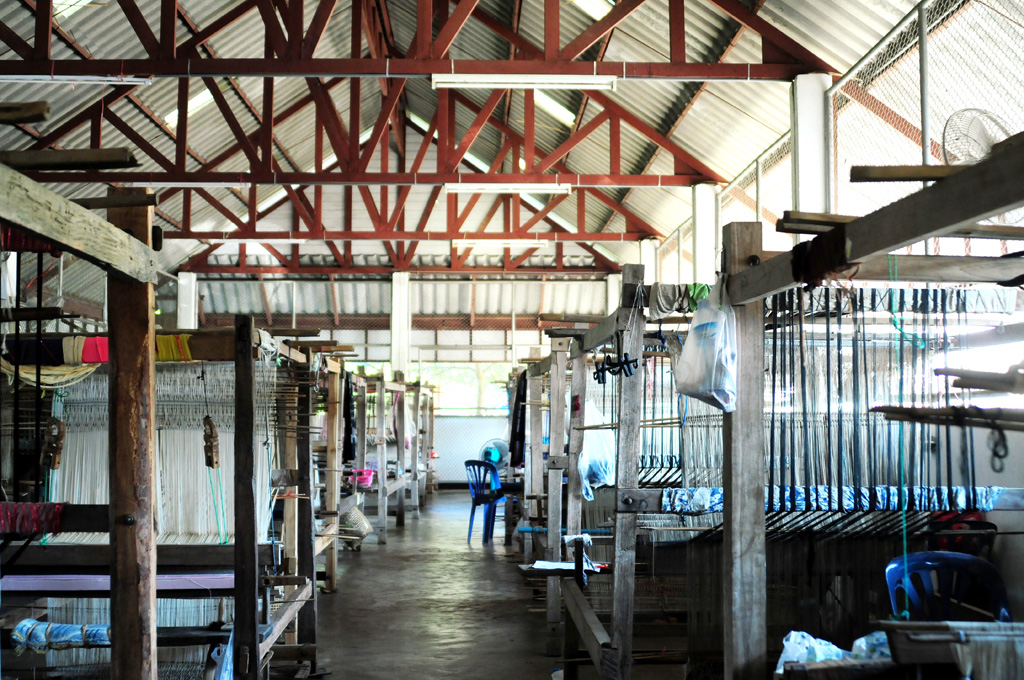
Ban Sao Luang is a community enterprise located in a village in Nan province in Northern Thailand. The weaving group, which counts about forty members, started in 1984 and mostly produces textiles in the Tai Yuan and Tai Lue ethnic group styles. In the beginning the artisans mostly worked with handspun cotton and natural dyes. The increasing demand for bright saturated fabrics and the easy access to machine-spun yarn deeply changed the weavers’ practice. The cooperative is well organized. Looms belong to the group and artisans only have to pay for raw materials. Each member invests 120 baht (5 dollars) a year in the fund which has now reached 70,000 baht (about 2000 dollars). It is used to make various investments for the community. Ban Sao Luang is also committed in educational programs that encourage students from the local school to learn weaving. Children start at a very young age, around 7 years old, with simple weaving structures such as tabby and then produce their first scarves and shawls.
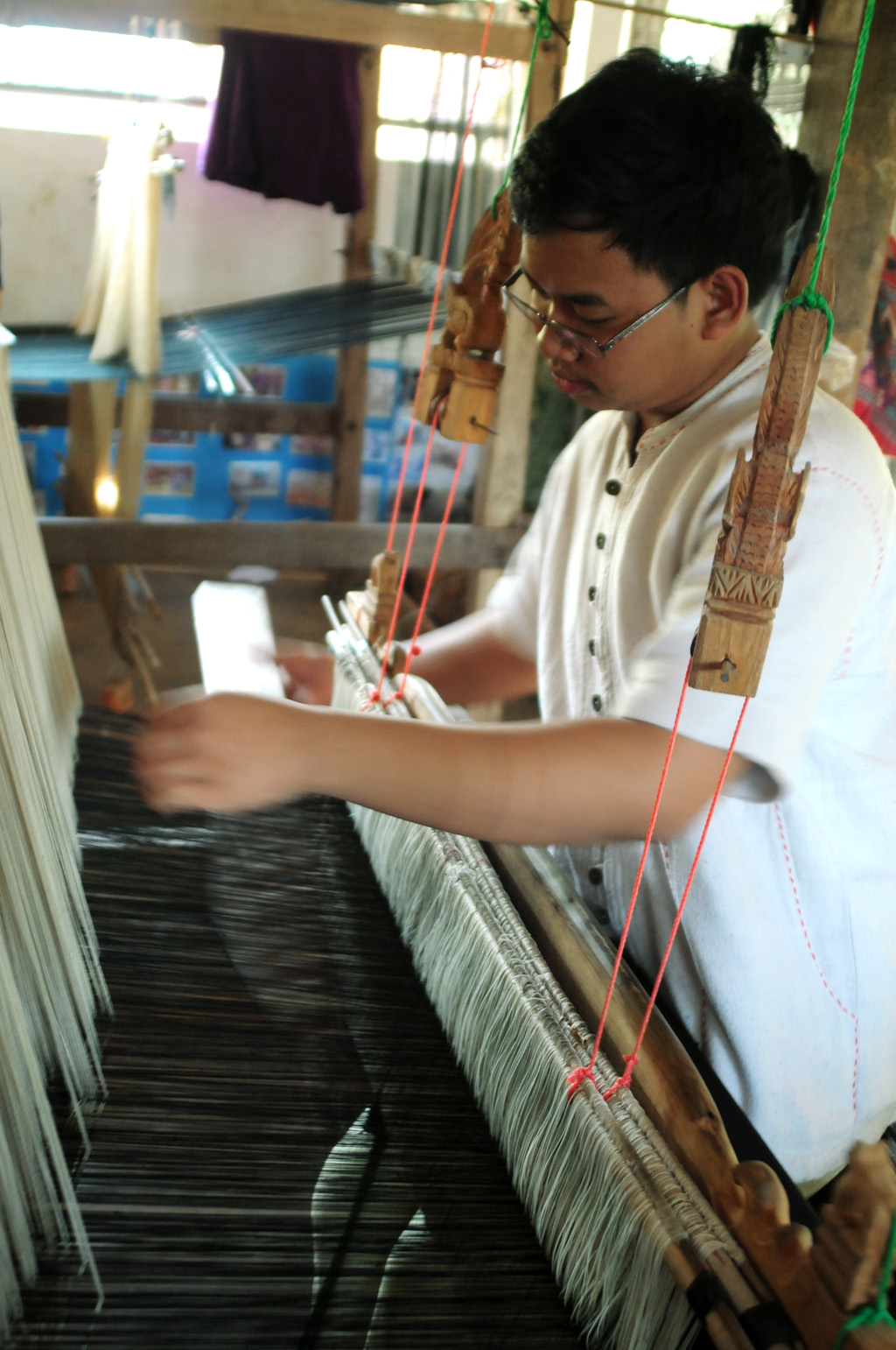
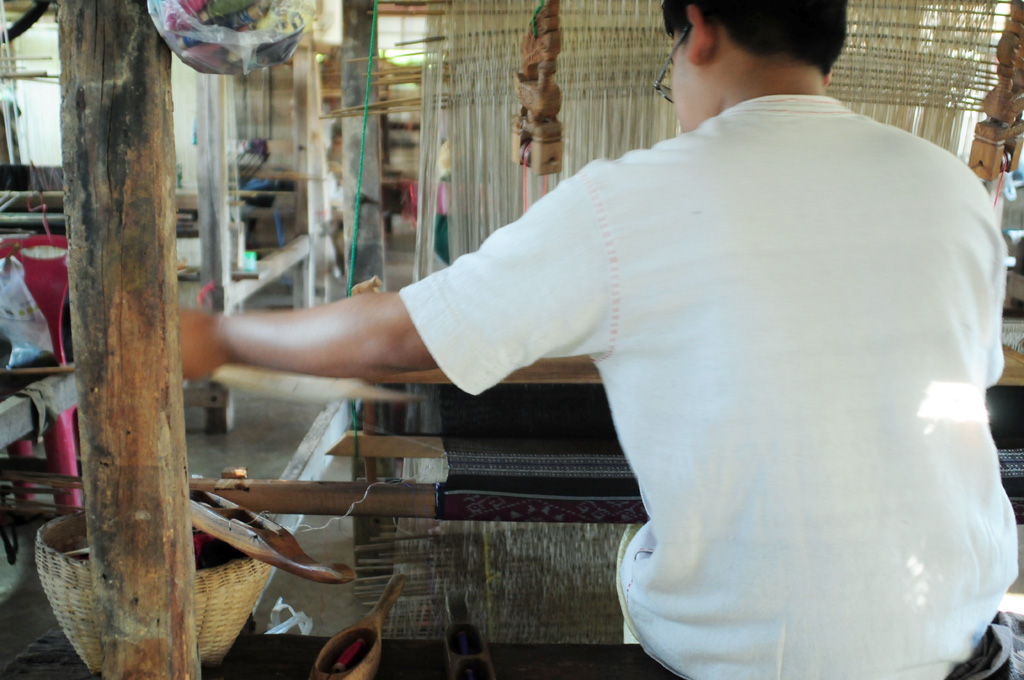
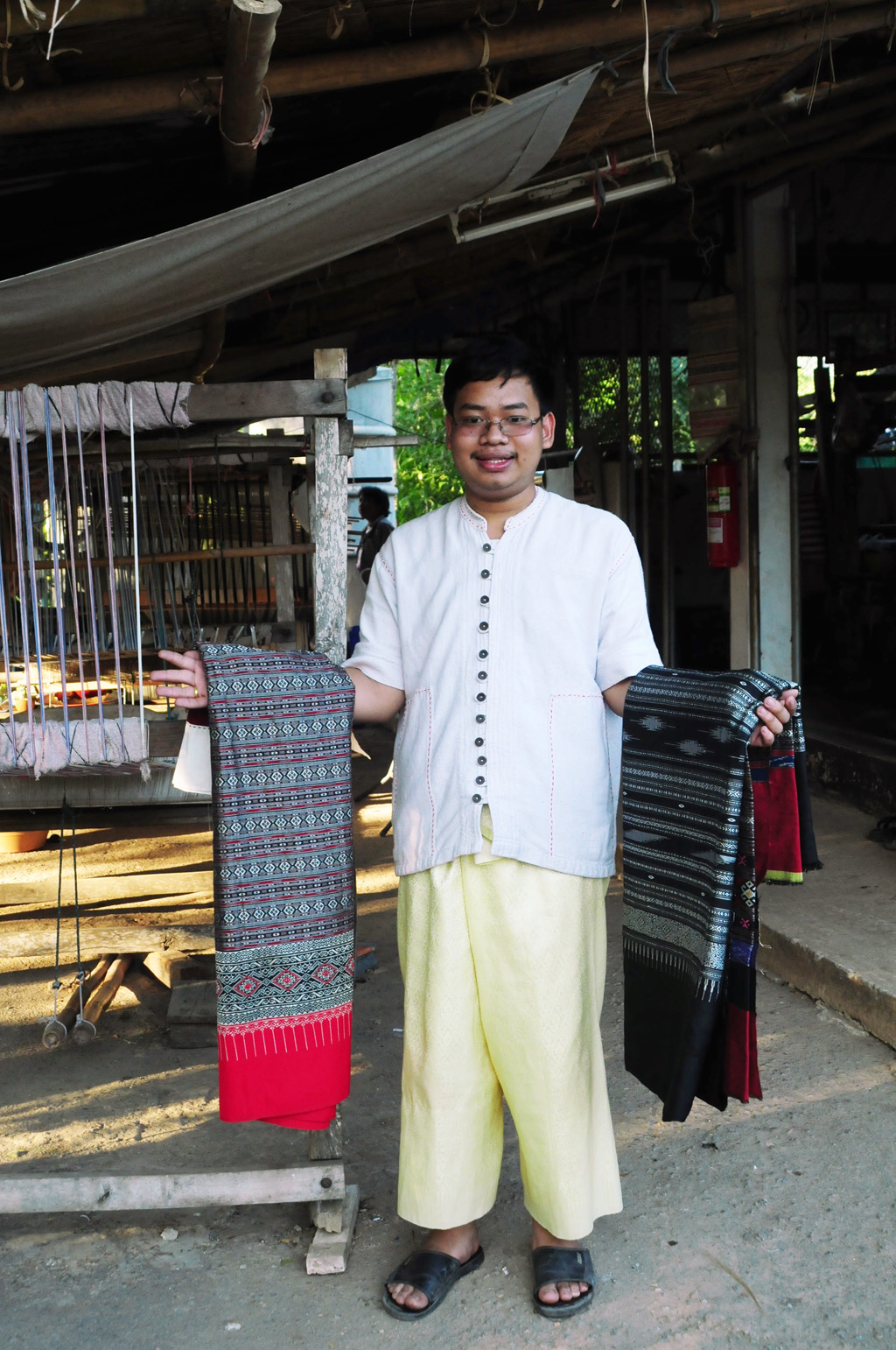
Weavers come early in the morning to work at the workshop. Within the community, the young passionate Korrakod Pangjai, who goes by the nickname of “Dream,” stands out. Weaving is usually a female practice in Thailand, and yet this young man who has just turned 18 has been practicing since childhood. He was born in Nan as an only child raised by his aunt, a skilled weaver who taught him all of her knowledge. Dream belongs to the Tai Yuan ethnic group which is dominant in Nan province. However in his designs he also includes techniques and motifs from the Tai Lue tribe, another group in the region. In Northern Thailand, textile styles are defined by the village and the area more than by the ethnic group.
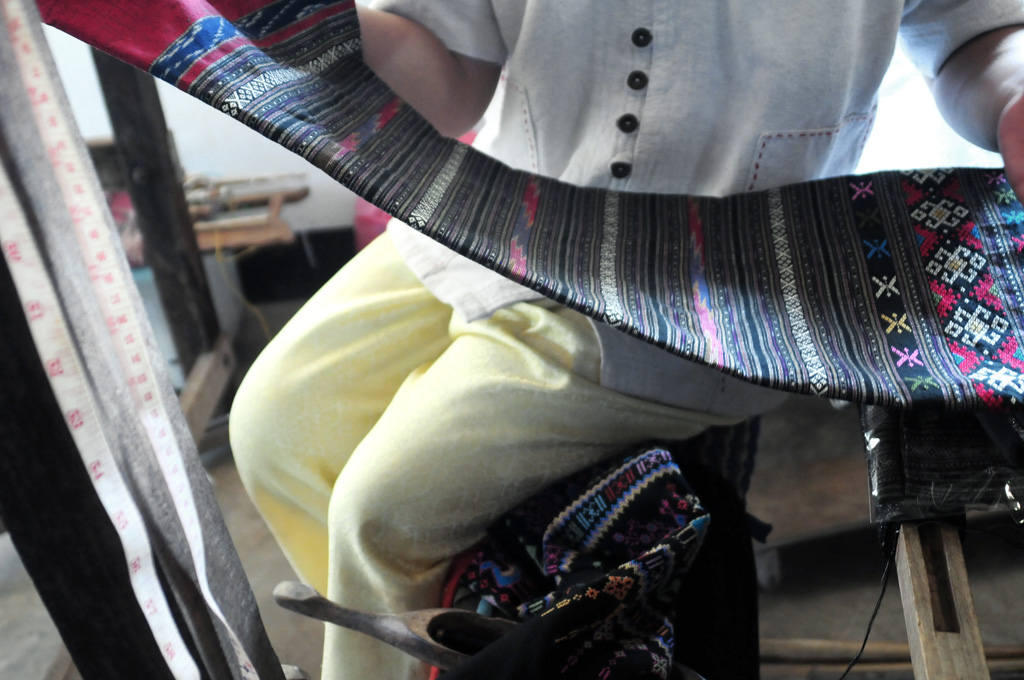
Nan local people are fond of bright colorful tube skirts with stripes of metal threads in gold and silver. Dream thus often mix natural dyes with chemical ones, silk with cotton. He likes to play with different techniques and develop new designs that mix the brocaded technique called khit with the two-tone ikat technique called mud kan. He finds his inspiration in ancient textiles that he finds at villagers’ homes, collecting them in exchange for his own fabrics.

Dream currently studies accounting in Nan’s local university. He spends all of his free time at the Ban Sao Luang workshop, every weekend and sometimes after school during the week. He produces and sells as many textiles, scarves and tube skirts pha sins as he can. With this money he hopes that he will afford tuitions to attend the Bang Sai Royal Folk Arts and Crafts Center located in Ayutthaya province where he will be able to perfect his weaving practice. Eventually he wishes to come back to his village and open his own atelier.


This story has been produced as part of the exhibition project On the Line in a partnership between The Royal College of Art and the British Council.


The Morocco stories are at La Tisserie !

13 July 2017

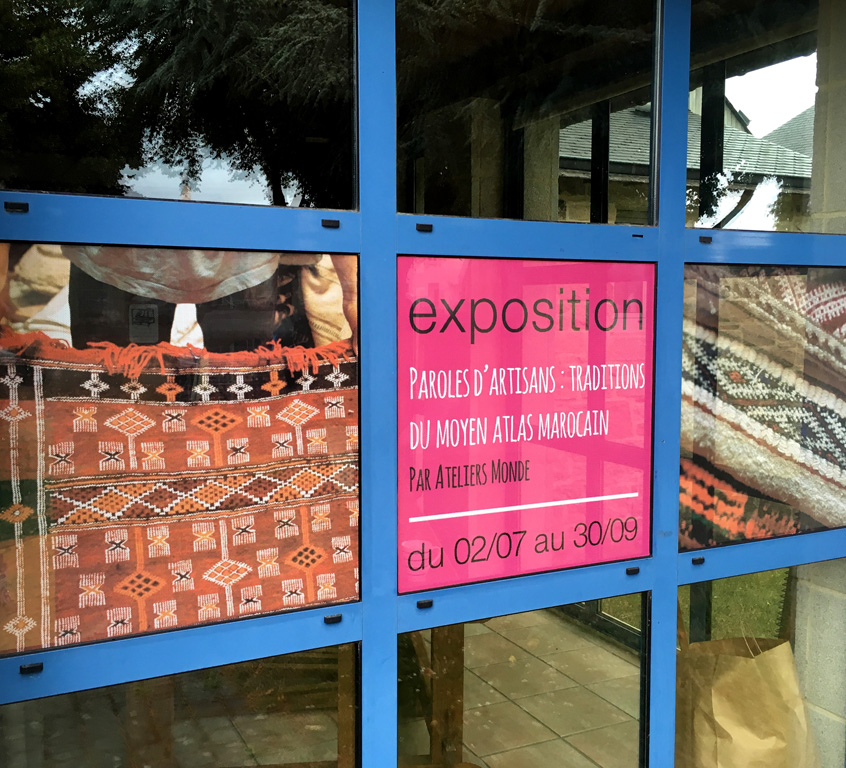
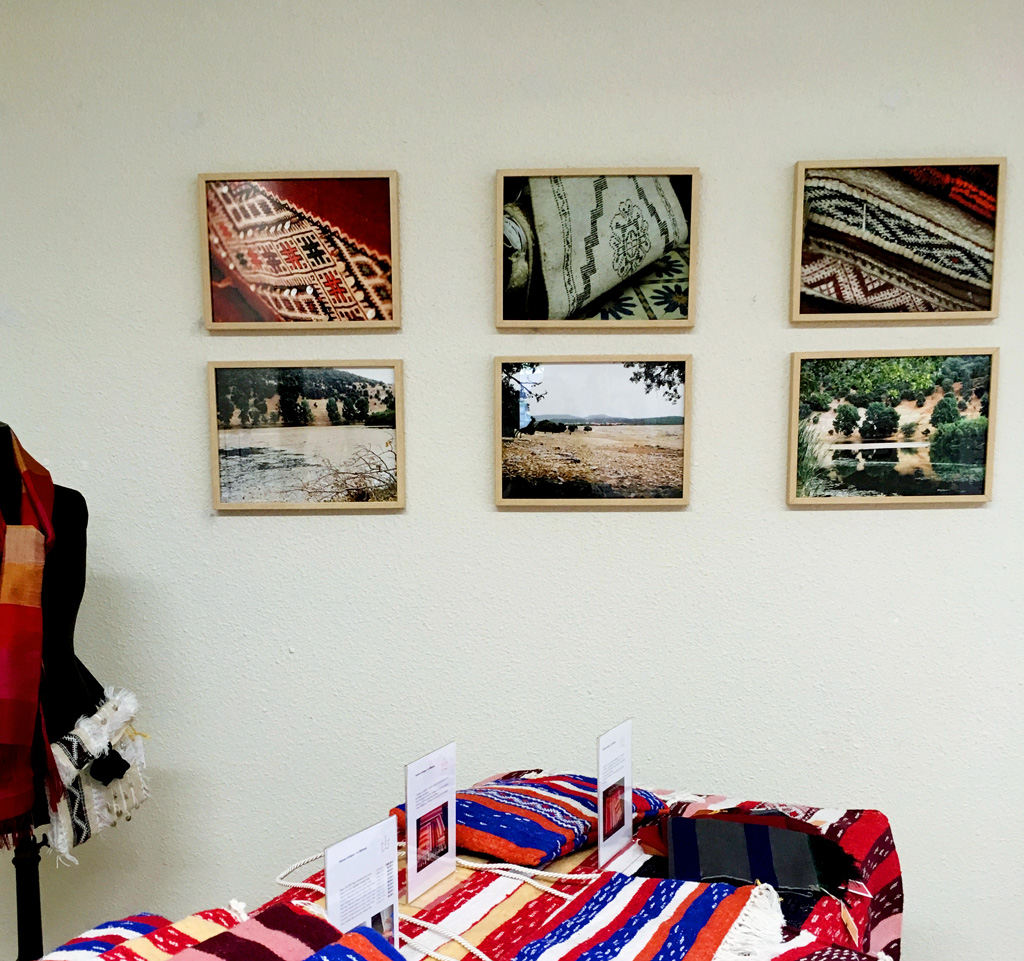
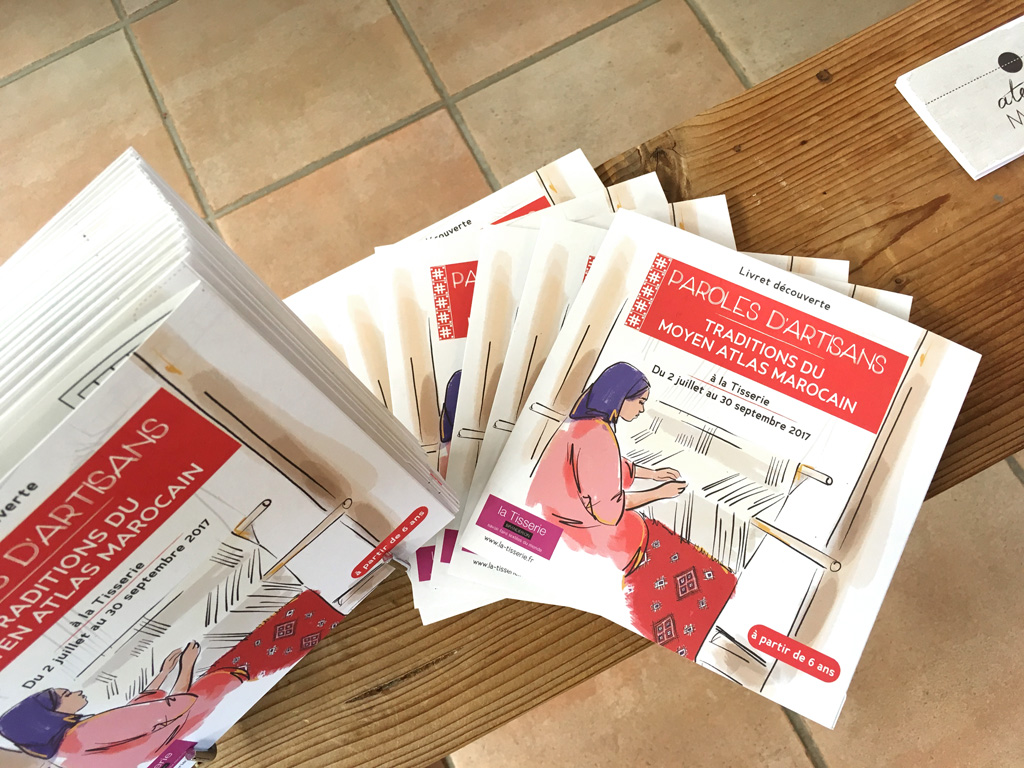
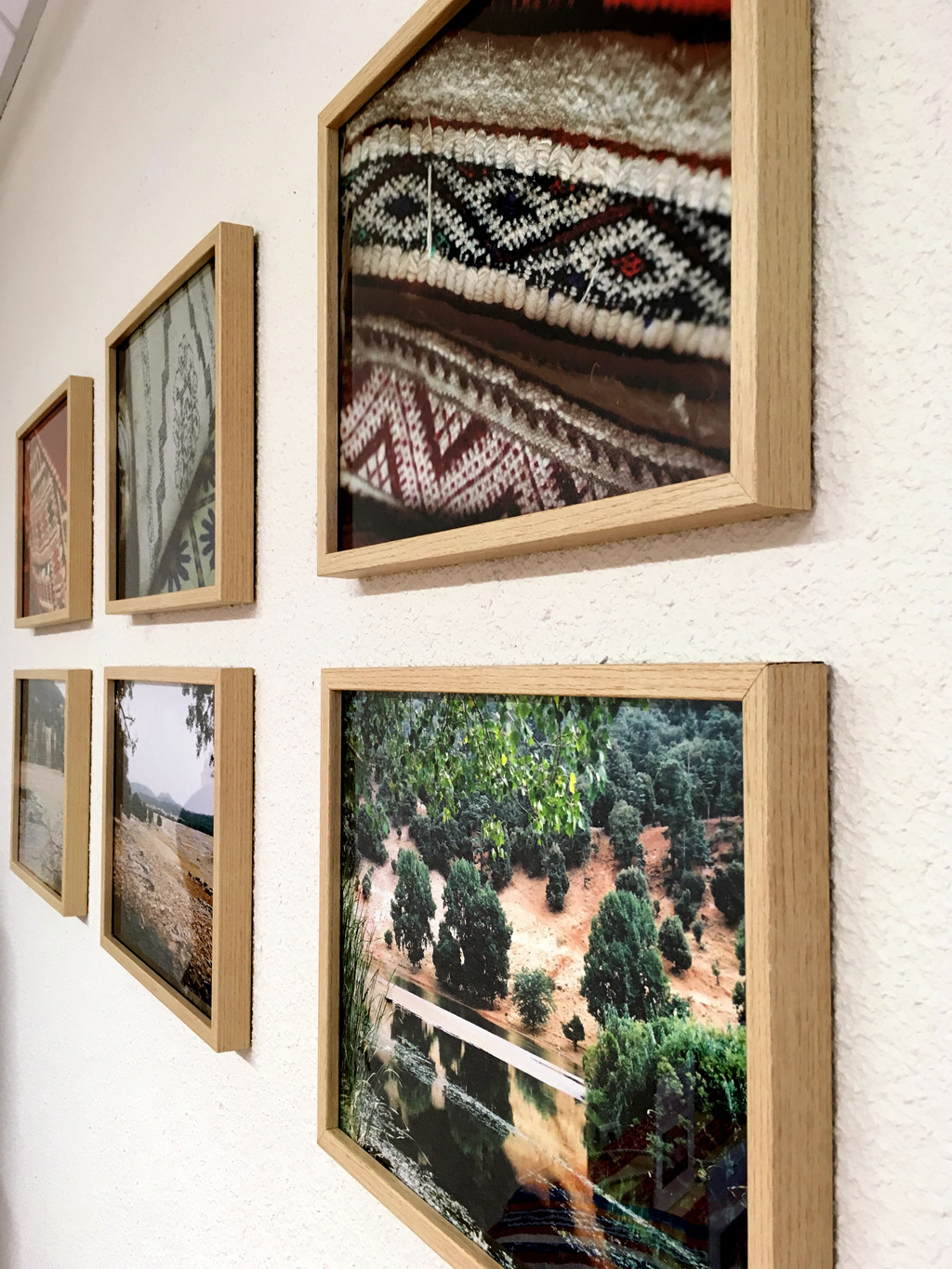
Tissus & Artisans du Monde is a documentary and research project supported by the non-profit Ateliers Monde, cultural production house to promote the “Made in World.” For the second consecutive year, Ateliers Monde has been invited by La Tisserie, textile museum of South Brittany to curate an original show. The webdoc’s Moroccan stories find a second life in Paroles d’artisans : Traditions du Moyen Atlas marocain which has opened at la Tisserie on July 2nd.

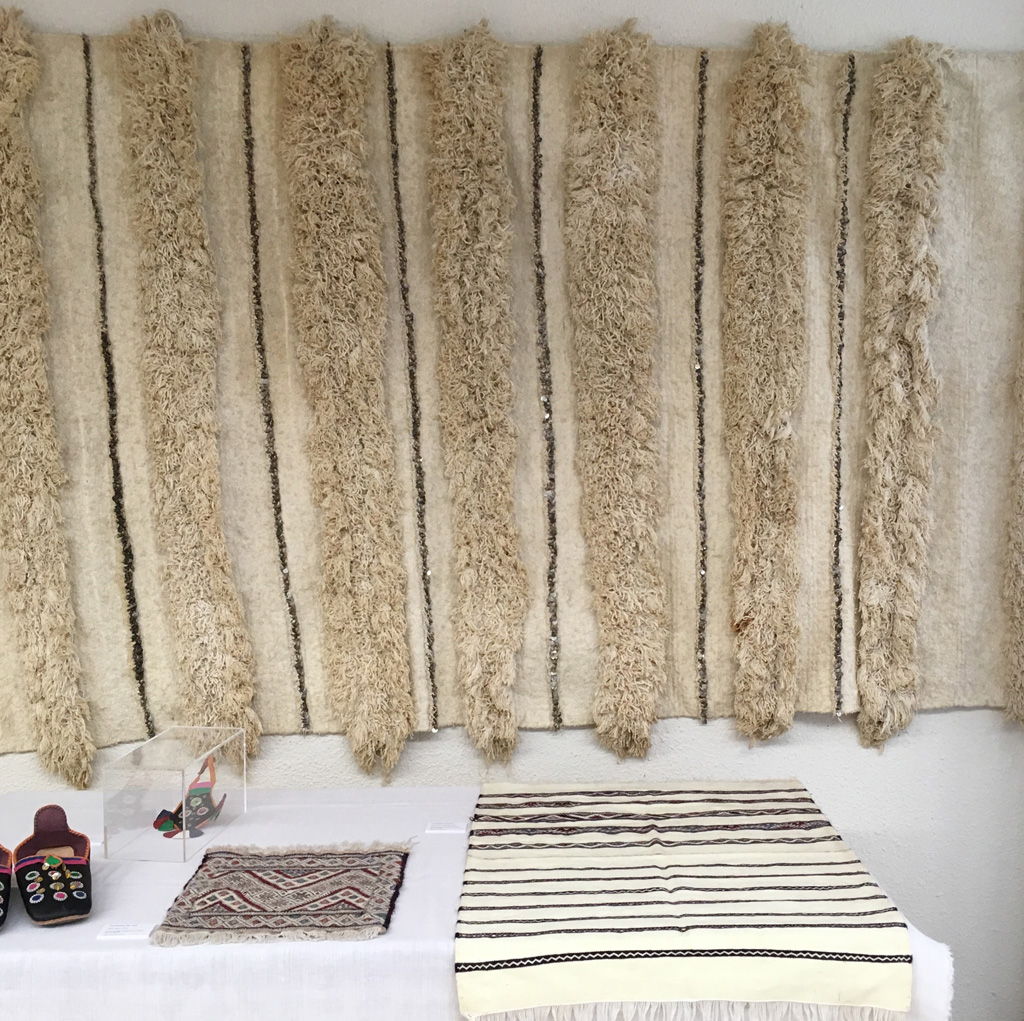
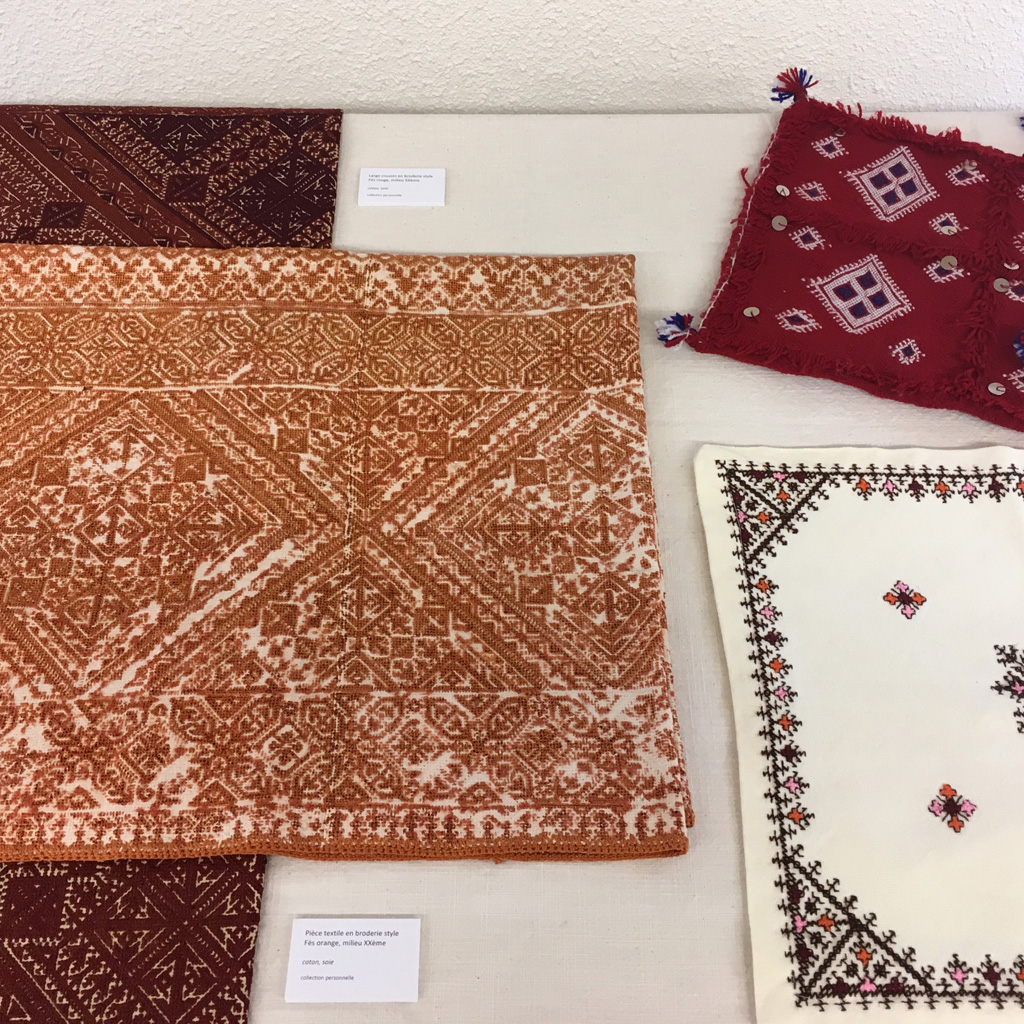
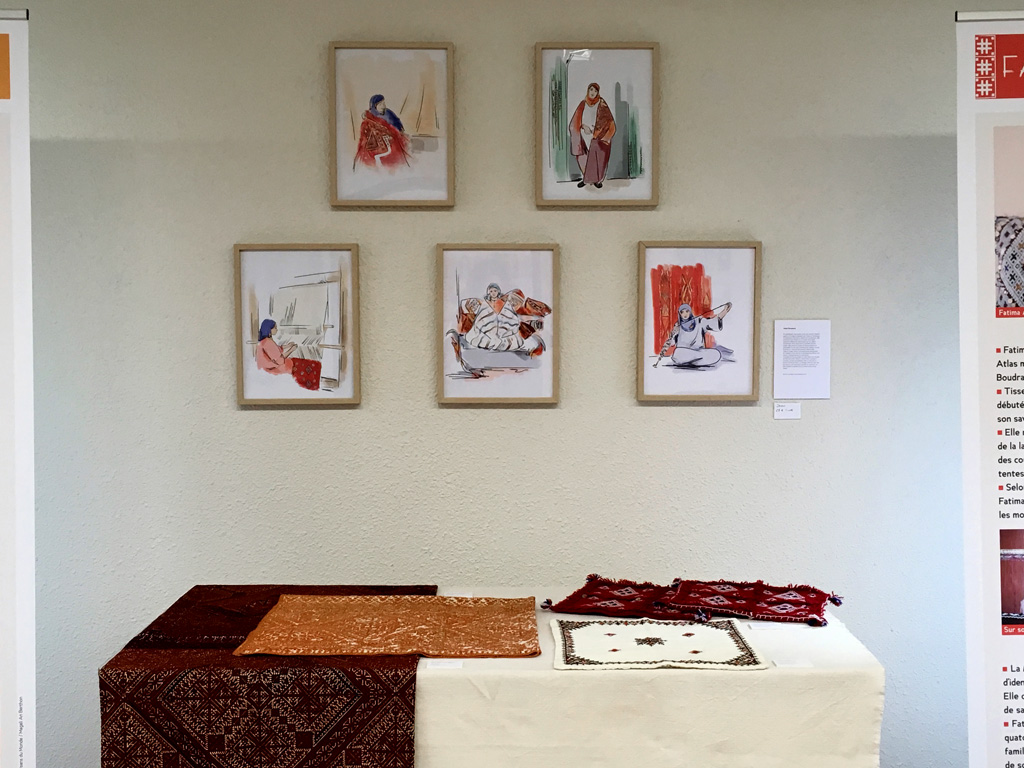
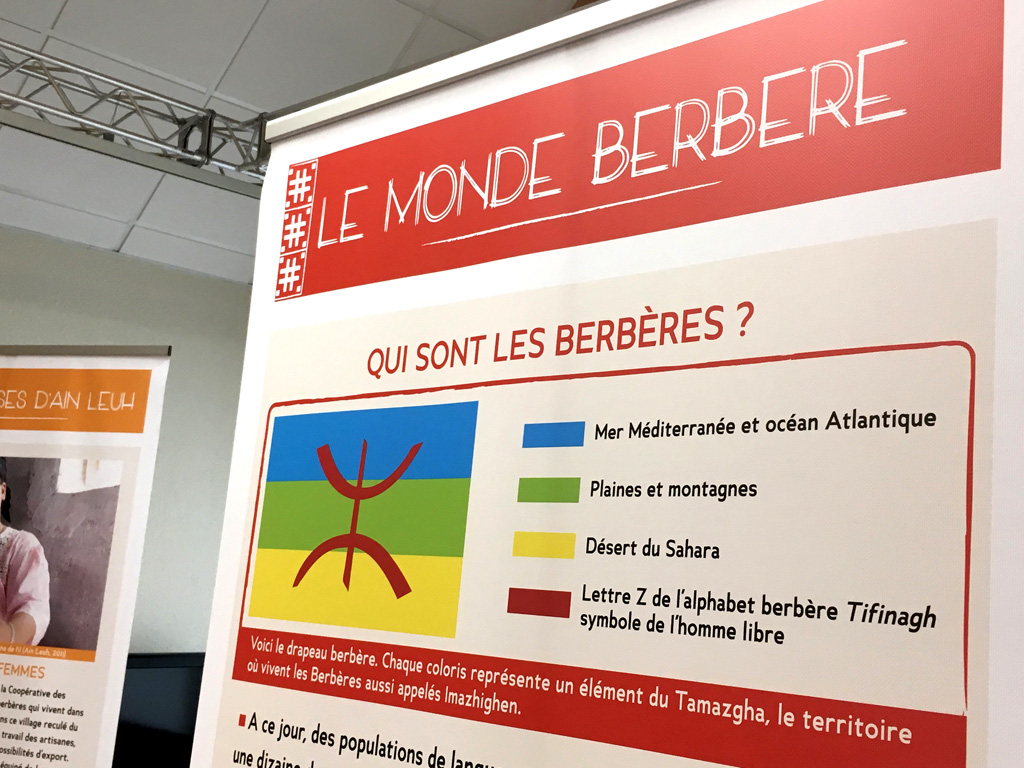
Visitors passing by the town of Brandérion will be able to discover stories of artisans who perpetuate ancient techniques in the Azrou area in the Middle Atlas. Fatima is a weaver from the Beni M’Guild Berber tribe ; the Ain Leuh women cooperative produce wool rugs ; Saïd is a traditional shoemaker in Azrou ; Abdou sells rugs in the souk ; and finally Hanene is an embroiderer in the Fez stitch tradition. The exhibition shares their testimonies and highlights their unique know-how through a multidisciplinary display that brings film, photography, didactic boards, and textile pieces together. These paths transcribe the reality of these professions in an area rich in Berber crafts and traditions at the heart of Morocco.

Ateliers Monde has also invited an illustrator and a textile designer to share their own vision of Moroccan textiles. Cécile Rousseau offers her own painted interpretation of Berber craftswomen in delicate illustrations. Fatima Lévêque, founder of the home textile house La Métisse, has developed a capsule collection of catchy home textiles and accessories made in collaboration with local weavers.

If you ever live in the area or if you are going to Brittany during summer, please add La Tisserie to your itinerary!

From July 2 to September 30, 2017
More information here:
www.la-tisserie.fr
contact@ateliersmonde.com


On the Line: New Perspectives on Textiles in Southeast Asia

8 May 2017

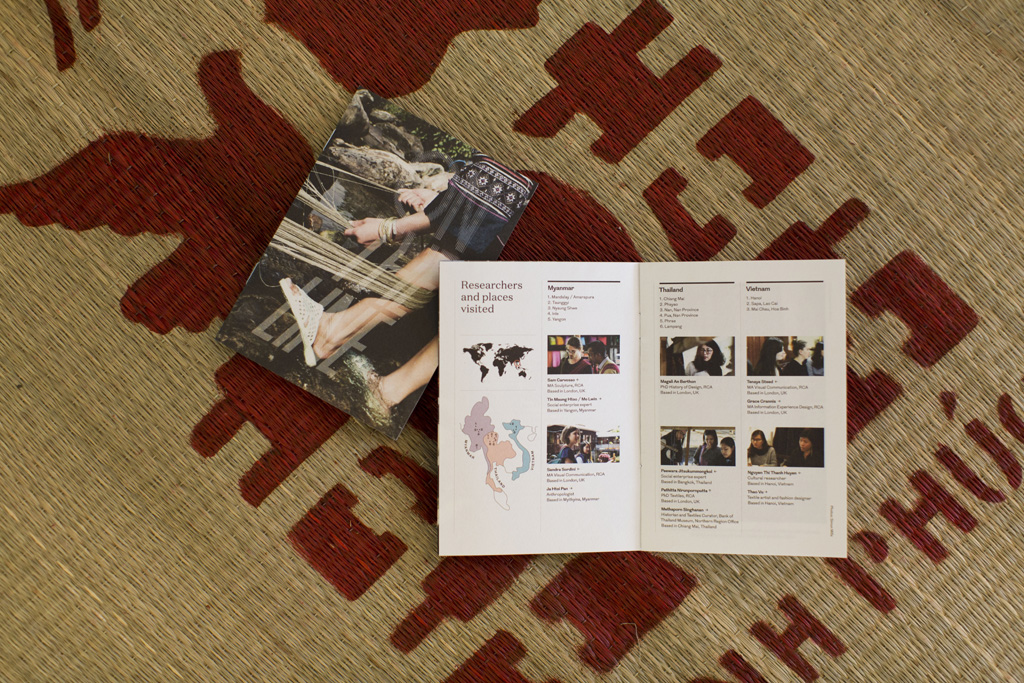
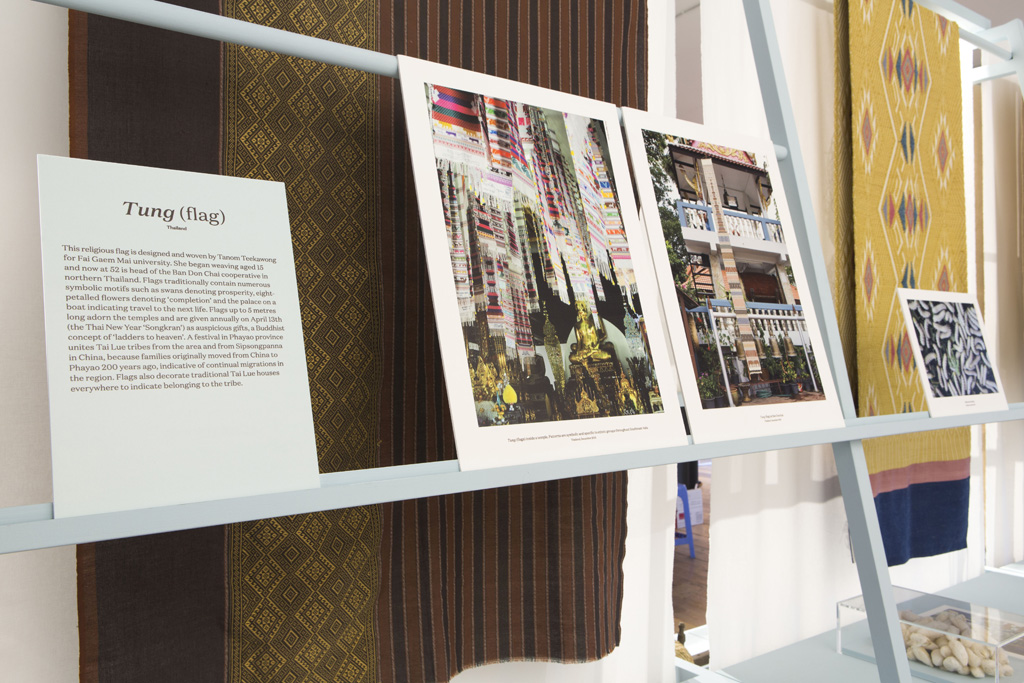
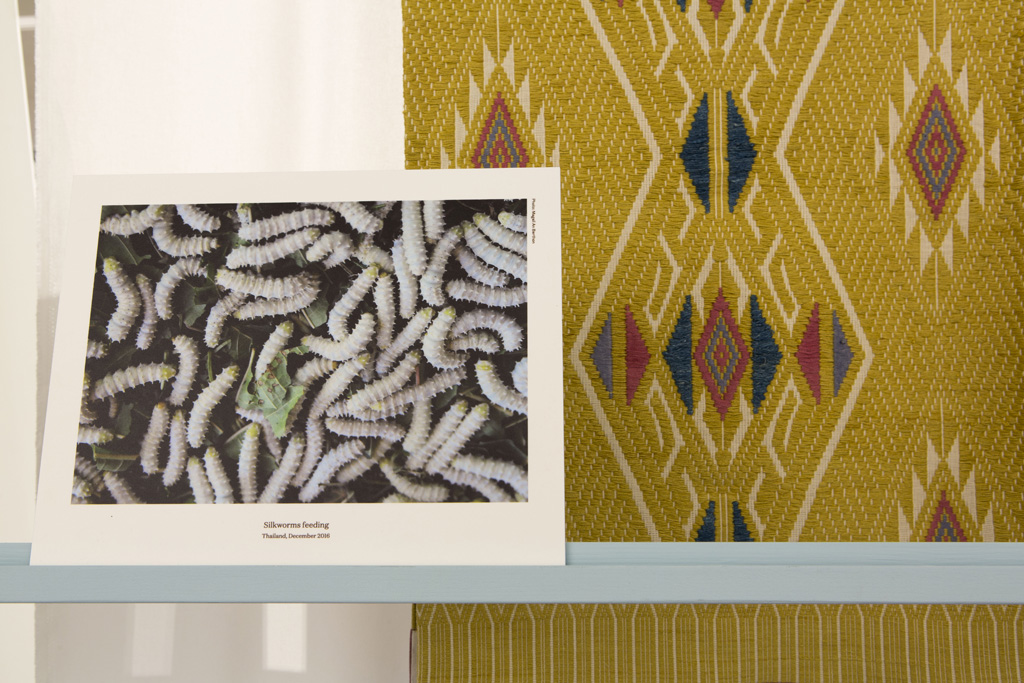
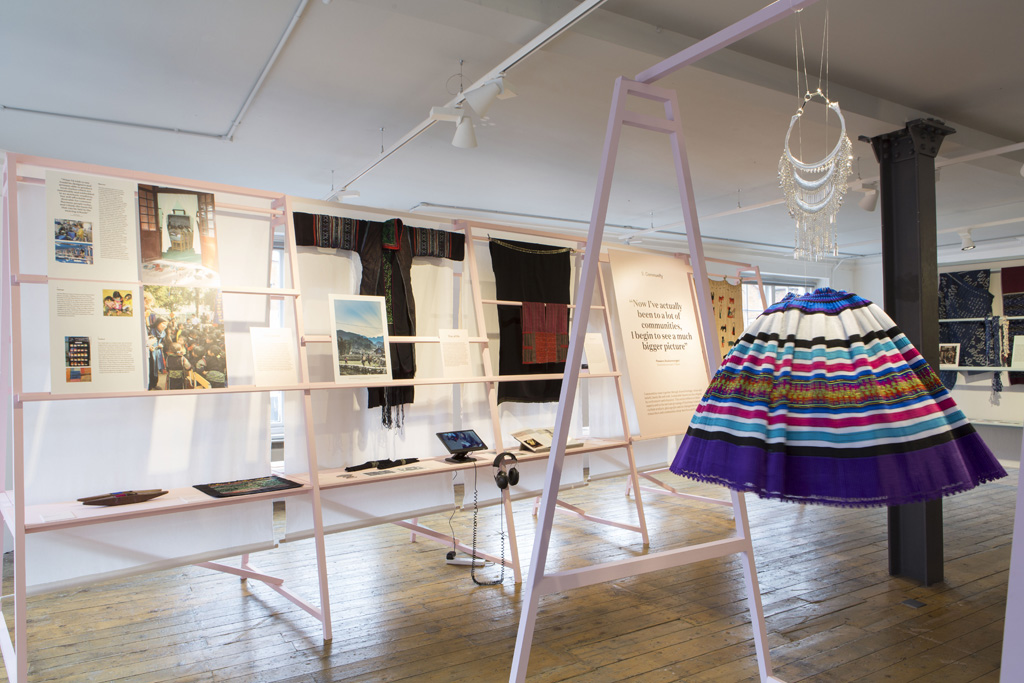
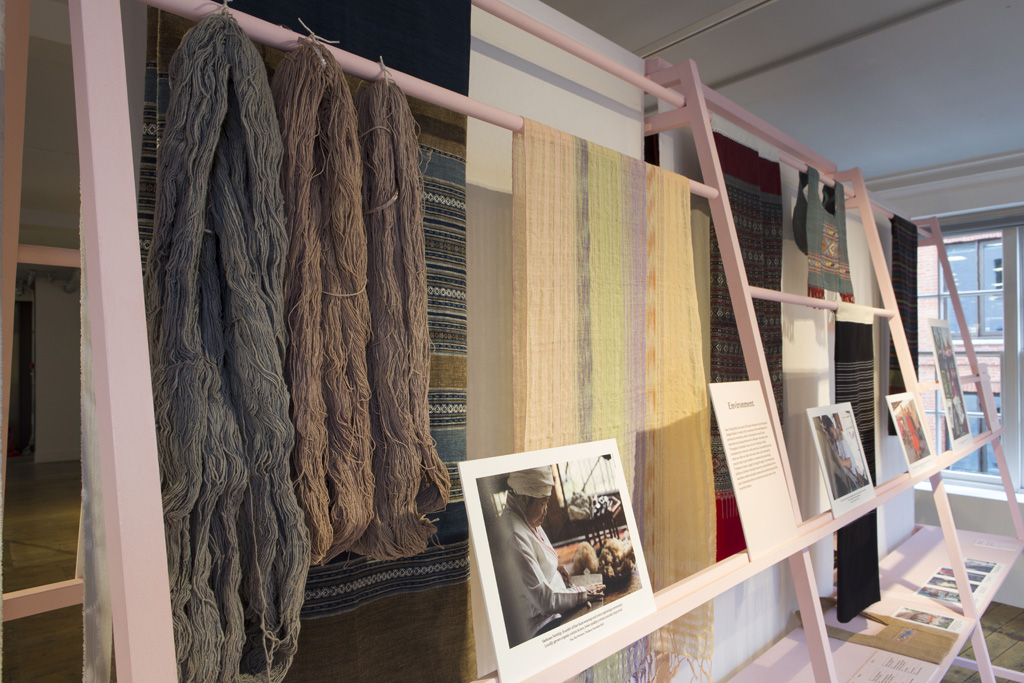
For London Craft Week‘s third edition, the exhibition On the Line: New perspectives on craft in Southeast Asia takes up the space of The Aram Gallery. From May 4th to June 17th, this ambitious show invites visitors to discover textile crafts from three Southeast Asian countries: Myanmar, Vietnam and Thailand. On the Line brings together the work of twelve researchers who were part of a residency to the initiative of the British Council and the Royal College of Art‘s combined effort. For each destination, a team of two masters and/or PhD students from the college and two local researchers (historians, anthropologists, and social enterprise specialists) was sent to study textile crafts and meet artisans — mostly women— in these areas. [I was myself selected to go Thailand as a PhD researcher based at the Royal College of Art.]

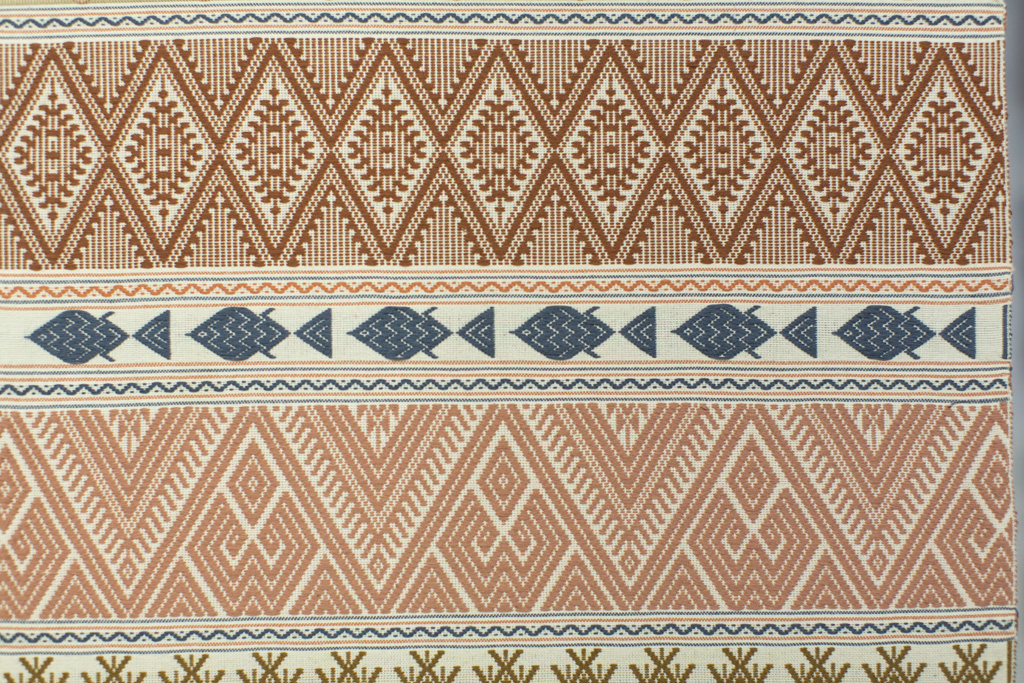
Mixing textile pieces, garments, sketches, pictures and film footages, this didactic and multimedia exhibition successfully captures the social and economic issues encountered by the rural textile communities who struggle to preserve their traditions in a globalized shifting world. To transcribe this rich and plural perspective, curator Martina Margetts has skilfully separated the gallery space in three distinct zones revolving around one specific topic: commerce, community, and craftsmanship. On the Line highlights female weavers’ work conditions, the mechanisms of skills transmission that often operate from mother to daughter, but also the economic and environmental aspects of artisanal practice. The abundant display of lustrous colorful textiles, traditional and more contemporary garments, hemp and cotton skeins’ fascinating materiality are delight for the eyes. They constitute vivid evidence of craft practices that are very much alive and that deserve to be known, understood and encouraged.

On the Line : New perspectives on craft in Southeast Asia à The Aram Gallery, 10 Drury Lane, Covent Garden, London WC2B 5SG from May 4th to June 17, 2017

Photo credits : Agnese Sanvito for The Aram Gallery / British Council


Scraps: Three Designers Inspired by Upcycling

18 October 2016

scraps_installation_10-cropped-for-website-e1475160728691

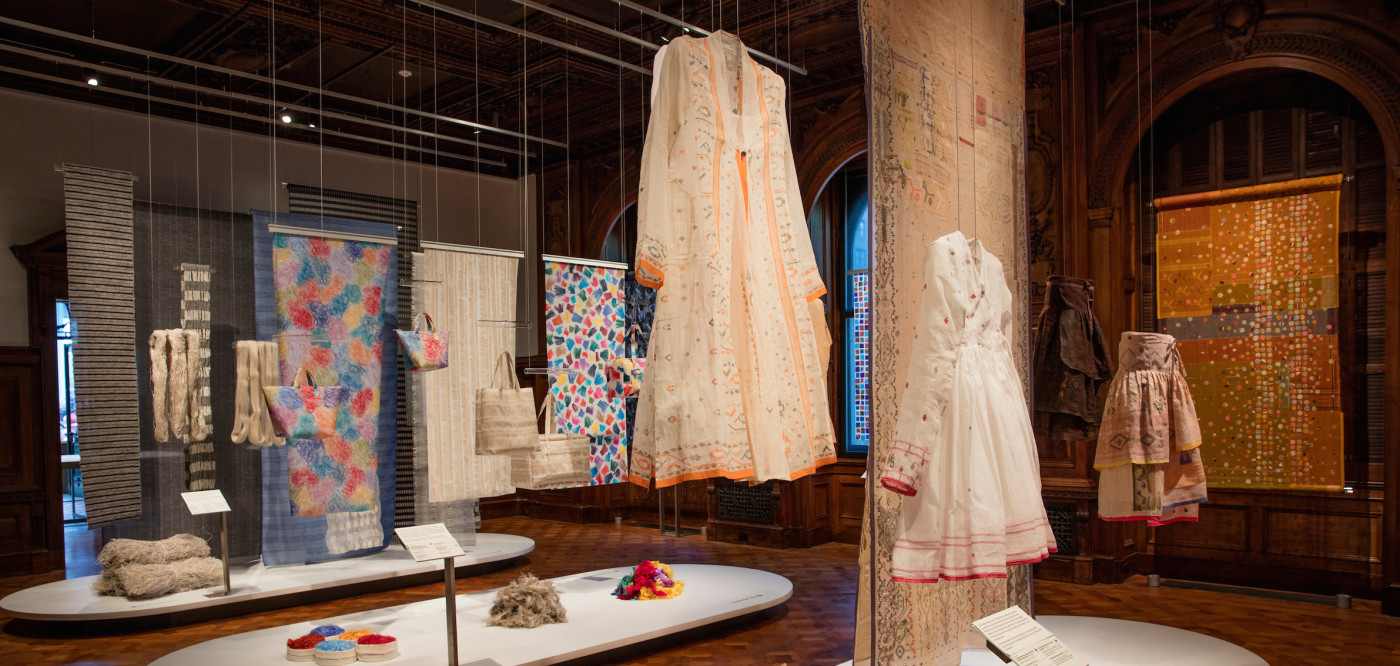
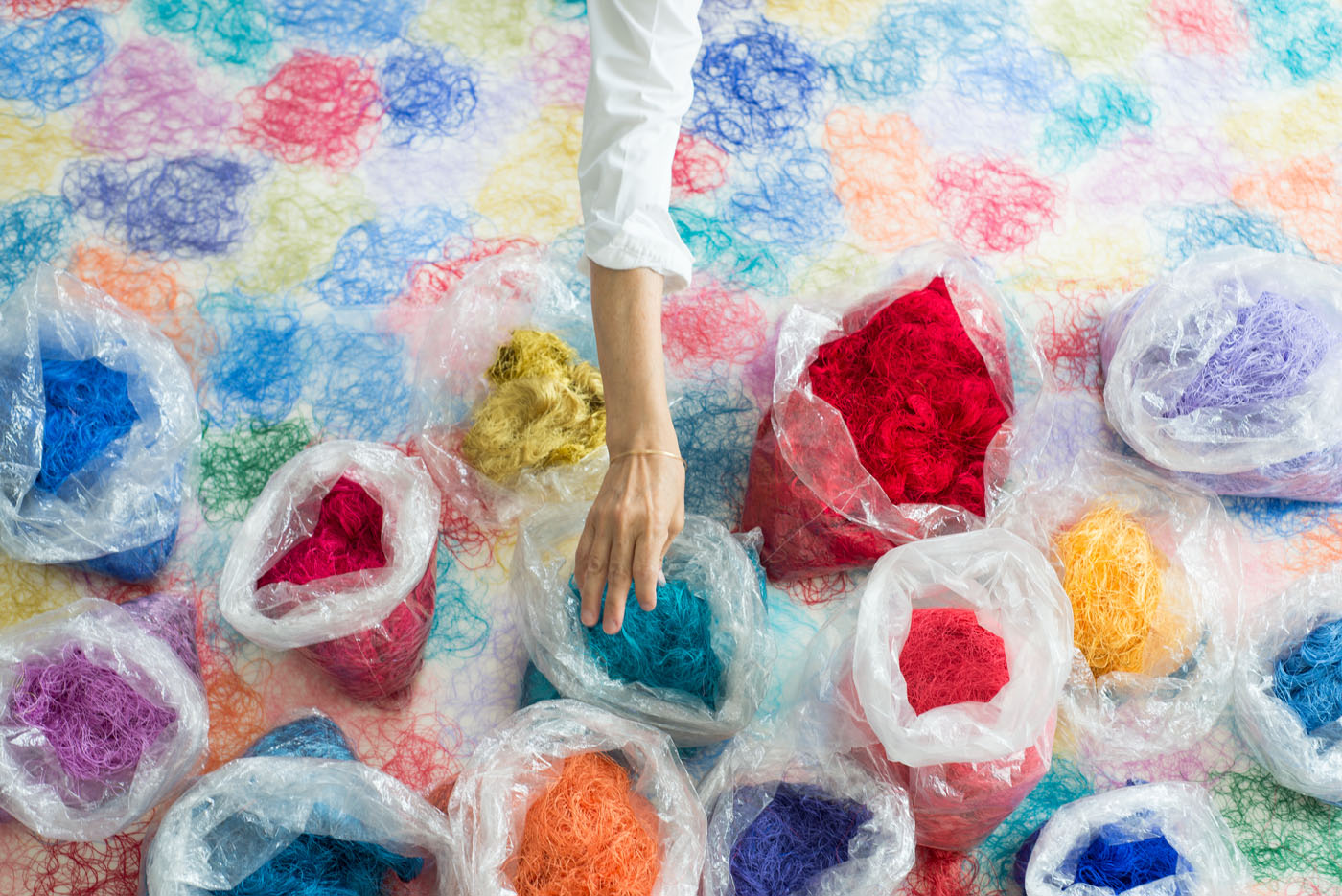
Since September 23rd, 2016, Scraps: Fashion, Textiles, and Creative Reuse—Cooper Hewitt Design Museum’s new Fall show—gathers a well-deserved attention in New York. Launched as the center piece of the New York Textile Month’s first edition, this exhibition addresses the issue of waste in the fashion and textile industry. It presents the sustainable approach of three textile designers: Christina Kim from dosa inc, Luisa Cevese from Riedizioni, and Reiko Sudo from NUNO, respectively from the United States, Italy and Japan. In different ways, these three designers aim to reduce the environmental impact of their production by combining craftsmanship, technology, and upcycling. Christina Kim designs delicate handcrafted clothes made of fine Indian brocaded cottons called jamdani and uses every scrap of it in second and third generations of garments. Luisa Cevese chose to make accessories in translucent polyurethane that incorporates textile waste (selvedges and yarns) collected in high-end textile manufacturers and workshops. And finally Reiko Sudo has developed an ingenious method to collect industrial silk waste (called kibiso in Japan) and turn it into ready-to-weave fibers for home textiles. Instead of being discarded, these different waste materials have become sources of inspiration and opportunities to experiment new creative methods.

Curators Matilda McQuaid and Susan Brown have opted for a minimalist and aerial scenography that visually connects these three stories together and opens a dialogue between them. In the Carnegie Mansion’s wooden period rooms, Scraps skillfully links tradition to innovation. The display uncovers the making process of each piece, allowing visitors to understand each step from the raw material to the final object.

Thanks to a Smithsonian Institute fellowship, I spent nearly a year assisting the Textile Department at Cooper Hewitt on the production of this exhibition. I developed an online accompanying platform called Scraps Stories with the support of the curators and in collaboration with the Publishing and Communication teams. For the whole duration of the show, you will find there a series of articles about sustainable fashion and textiles, including a green glossary, insightful facts and figures, and a world tour of mending and repair traditions.

Scraps: Fashion, Textiles, and Creative Reuse
Cooper Hewitt National Design Museum
2 E 91st St, New York
NY 10128
www.cooperhewitt.org

Cooper Hewitt National Design Museum, Smithsonian Institute, Riedizioni, dosa inc, NUNO)

Conference about textiles – Saturday October 22, 2016

13 October 2016

affiche-textiles-3

Magali An Berthon, textile designer, researcher, and founder of the web documentary project Tissus & Artisans du Monde (World Textiles & Artisans), will be at Berthe Morisot library in Maurecourt, France (78) on Saturday October 22nd, 2016 for a special event. She will talk about her interest for textiles from all over the world, will share fieldwork stories, and show a selection of textile samples collected during her trips. This fall Berthe Morisot library offers a cycle of public programmes dedicated to textiles (conference, workshop, and children’s performance).

Meet Magali on Saturday October 22, 2016 at 4pm
Bibliotheque Berthe Morisot
Sente des carreaux,
Chemin de la ville de Paris
78780 Maurecourt

More information here :
(0033)139747043
bibliotheque@maurecourt.fr

( © image Bibliothèque Berthe Morisot)


Krama of Cambodia, Fabric of Identity – Exhibition at La Tisserie

2 August 2016

Krama-expo-tisserie2

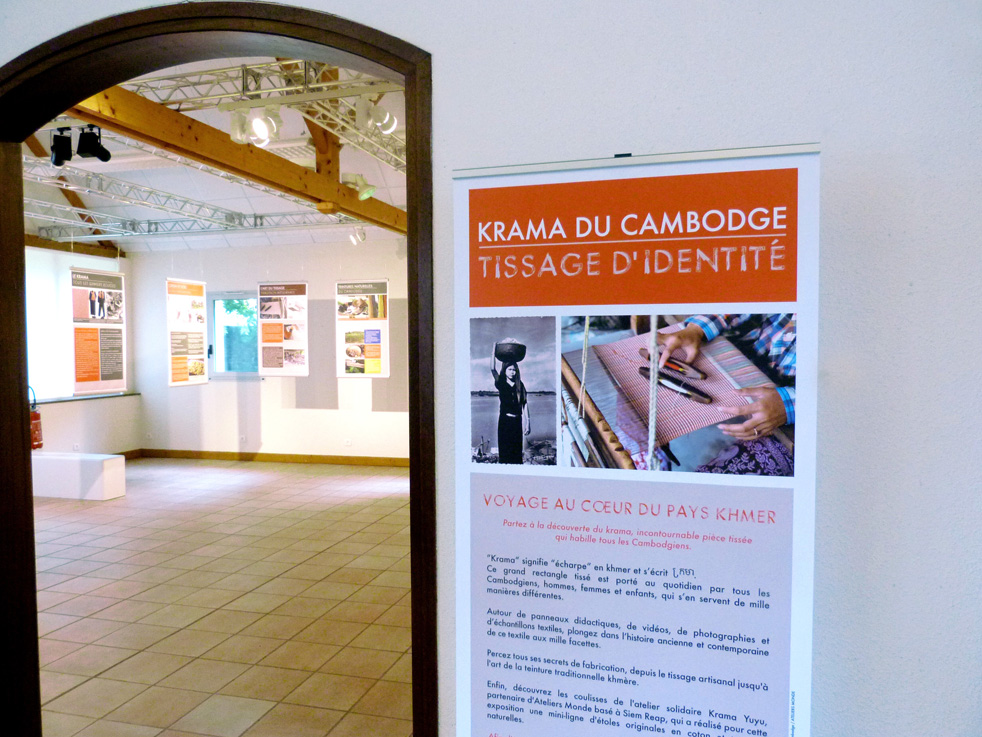
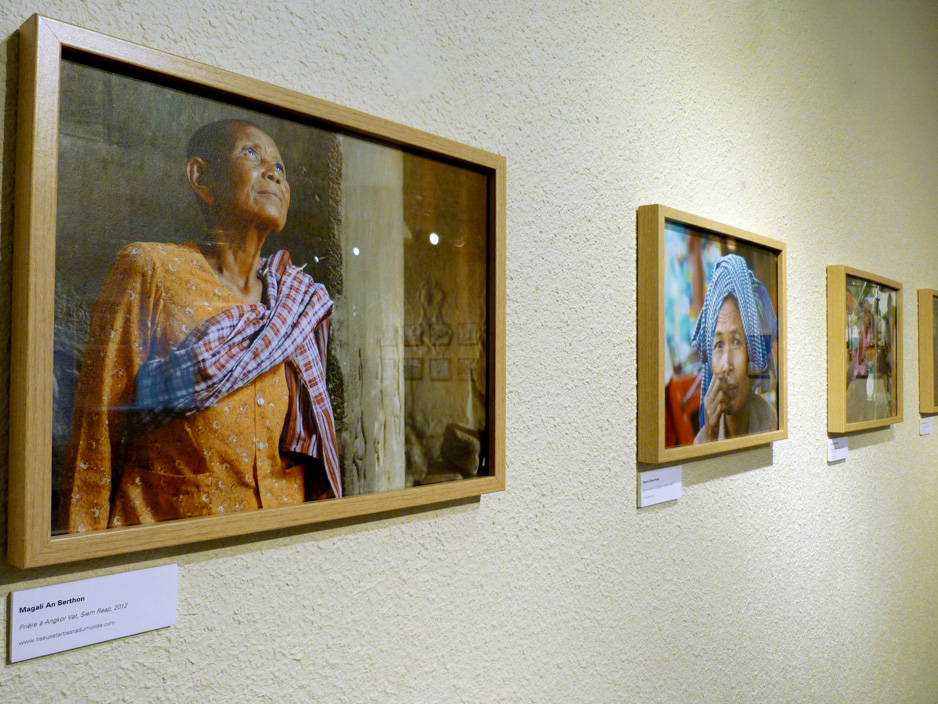
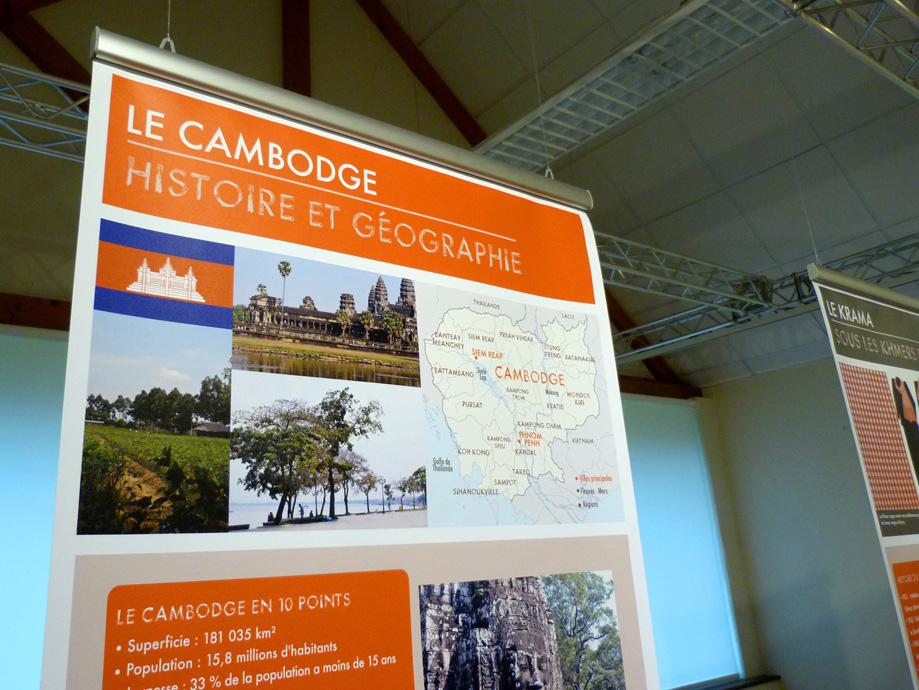
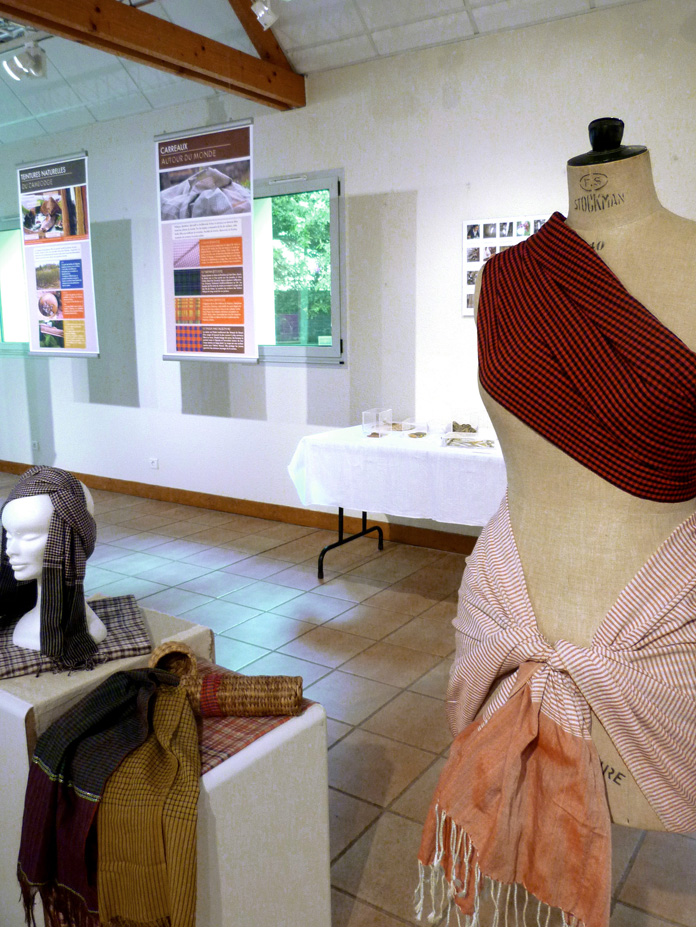
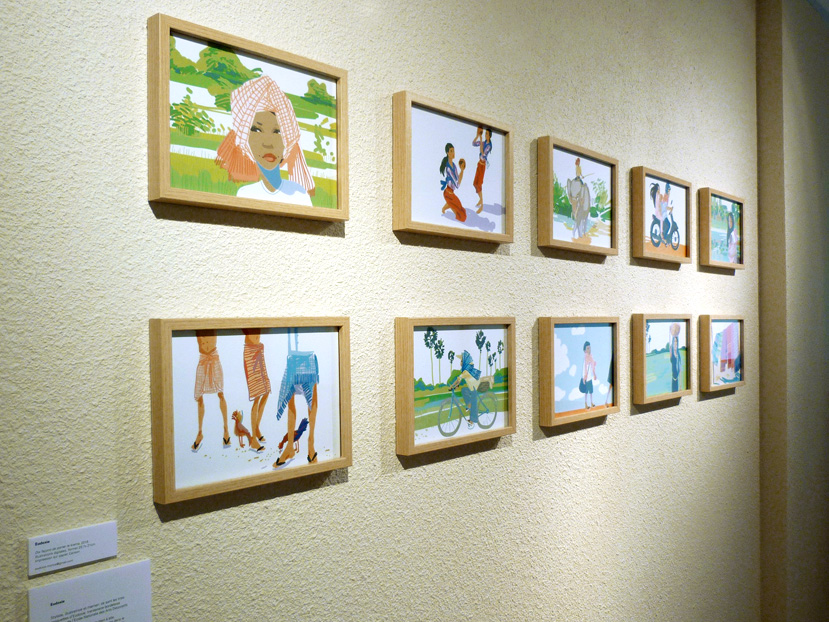
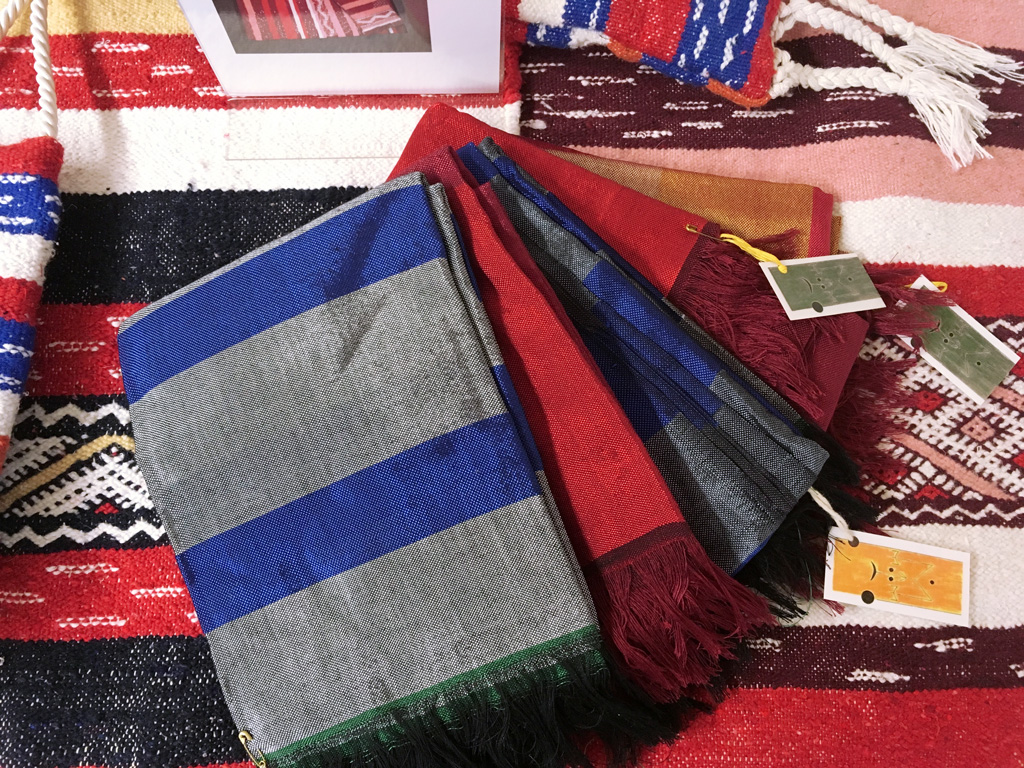
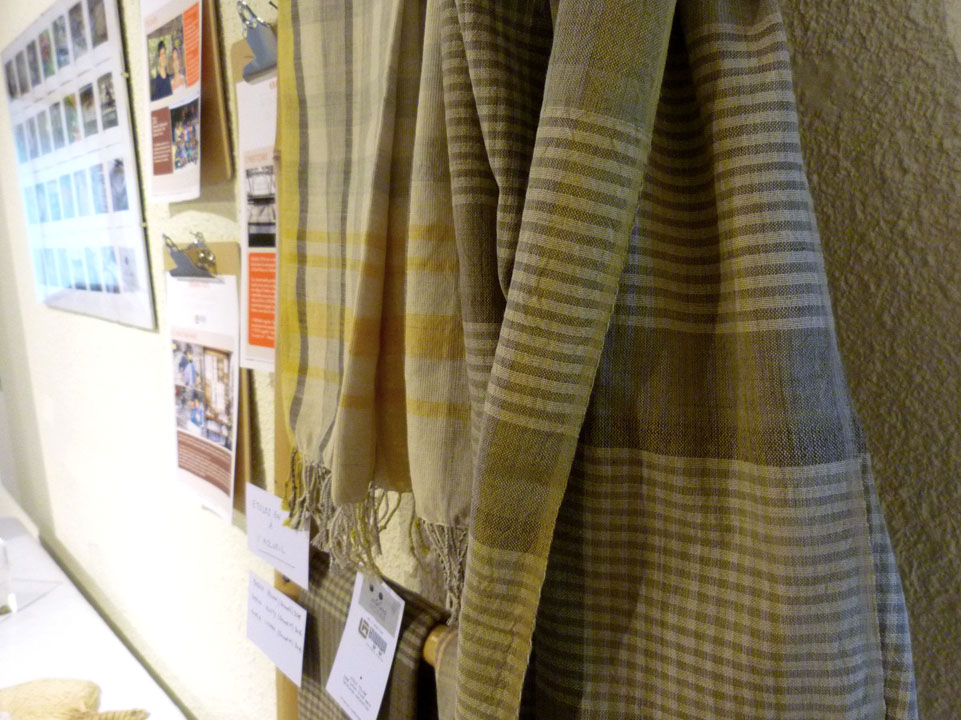
Since July 1st, 2016, la Tisserie, Textile Museum of Lorient Area in South Brittany, has welcome the exhibition Krama of Cambodia, Fabric of Identity (Krama du Cambodge, Etoffe d’Identité) produced by the non-profit agency Ateliers Monde. In a multimedia display that combines didactic panels, videos, photography, and textile samples, the show includes two stories from Tissus & Artisans du Monde: Thea and the Natural Dyes and Mai, Weaver from Takeo. Ateliers Monde has also invited illustrator Eudoxie and photographer Savary Chhem-Kieth from Khemara Khmer Cultural Center to share their vision of Cambodia’s traditional checkered cloth. Finally the agency has produced a limited-edition krama-inspired scarf collection in cotton and natural dyes that will be for sale during the whole exhibition.

If you live in Brittany, or if you pass by the town of Branderion during your holidays, come to La Tisserie ! More information here.
Exhibition Krama of Cambodia, Fabric of Identity (Krama du Cambodge, Etoffe d’Identité)
Until September 30, 2016
www.la-tisserie.fr


Leslie Sudock, advocate for textile art

13 May 2016

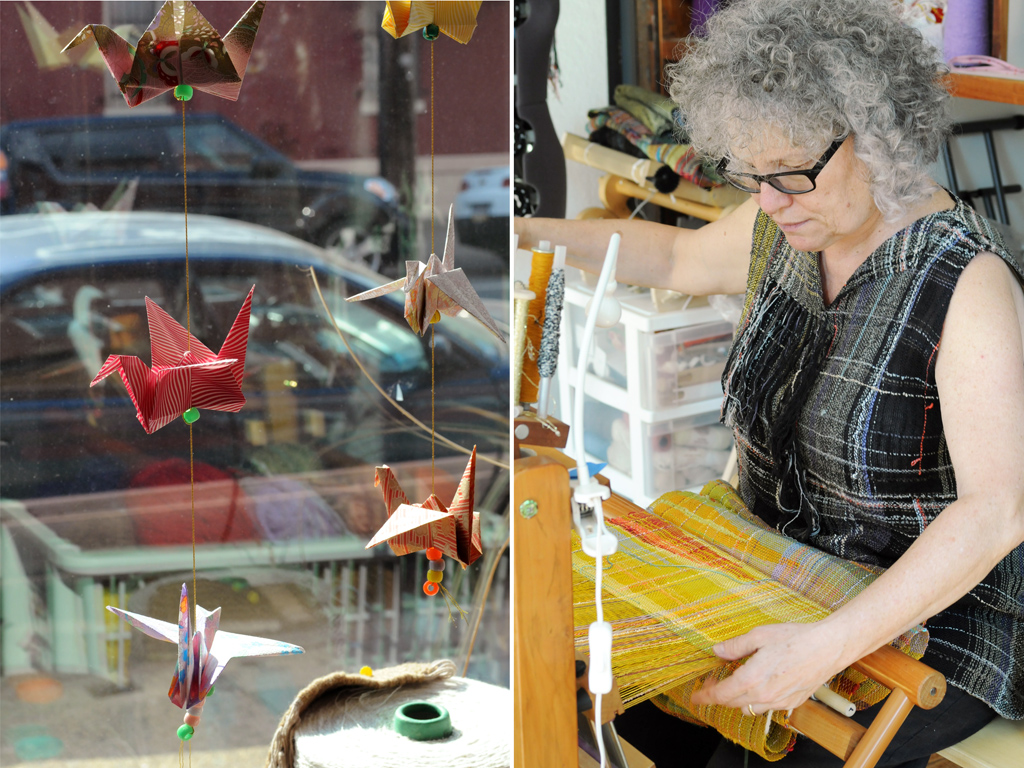
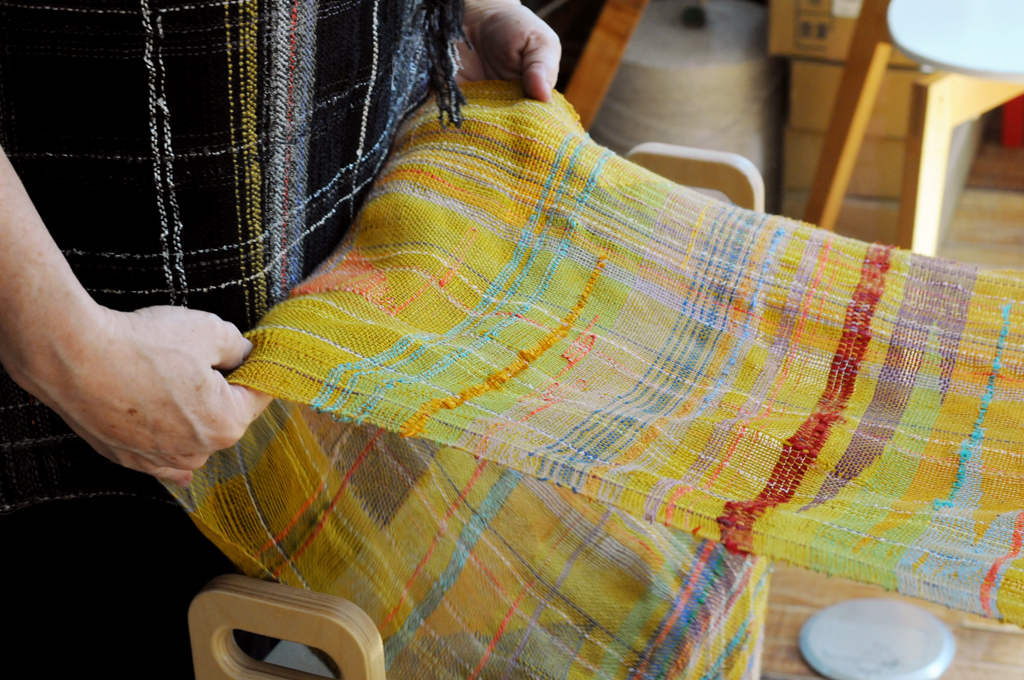
Leslie Sudock, lawyer, activist and fiber artist, has opened her workshop called Ready to Hand in the south side of Philadelphia. In 2013, she bought a small building in this working-class district and set up her space on the ground floor. Through the workshop’s large windows, the beautiful natural light softly lands on the colorful yarn cones and the textile pieces hanging on the walls. In this peaceful atmosphere, a dozen of artisanal looms are ready for use. Leslie Sudock offers one-of-a-kind weaving classes. She welcomes small groups of apprentices who wish to discover the precepts of SAORI weaving. Transmission is central to this philosophy. She herself received teaching from Mihoko Wakabayashi from the Worcester SAORI studio, Massachusetts in 2012.

This movement was launched in Japan by Misao Jo in 1969. More than a craft, SAORI is considered an artistic philosophy in the ZEN tradition, following the motto “learn from each other, inspired by everyone.” Sa is the abbreviation of sai, a Zen term meaning dignity, and ori stands for “weaving“ in Japanese. Open to all, regardless of age or physical condition, this practice calls for improvisation. Warp is usually already set up on the loom, but not always. Some weavers, including Leslie, still prefer to make their own warps. And then, weavers only need to work on the weft with cotton and wool yarn, according to their inspiration. Without following a pre-determined pattern or weave structure, it is like painting with colored yarn on a canvas. Once the weaving is finished, fabrics can be turned into scarves, or used to make clothing. These unique pieces of wearable art, coats and ponchos, are assembled by hand with very little intervention on the original textile, usually sewn selvedge to selvedge and without any hem.
Sudock has always been very involved in her neighborhood’s life. Ready to Hand is located in a changing area. Values of sharing and sense of community are at the heart of her textile approach. Convinced of SAORI’s positive therapeutic effects, she shares her knowledge in Philadelphia’s classrooms with children, but also in homeless shelters, working in particular with the Street Arts Textiles programme.
In SAORI, uneven edges, happy glitches, and graceful irregularities celebrate the beauty of imperfection. This sensible and empirical art reveals itself in regular practice, and also offers the opportunity to strengthen social bonds.